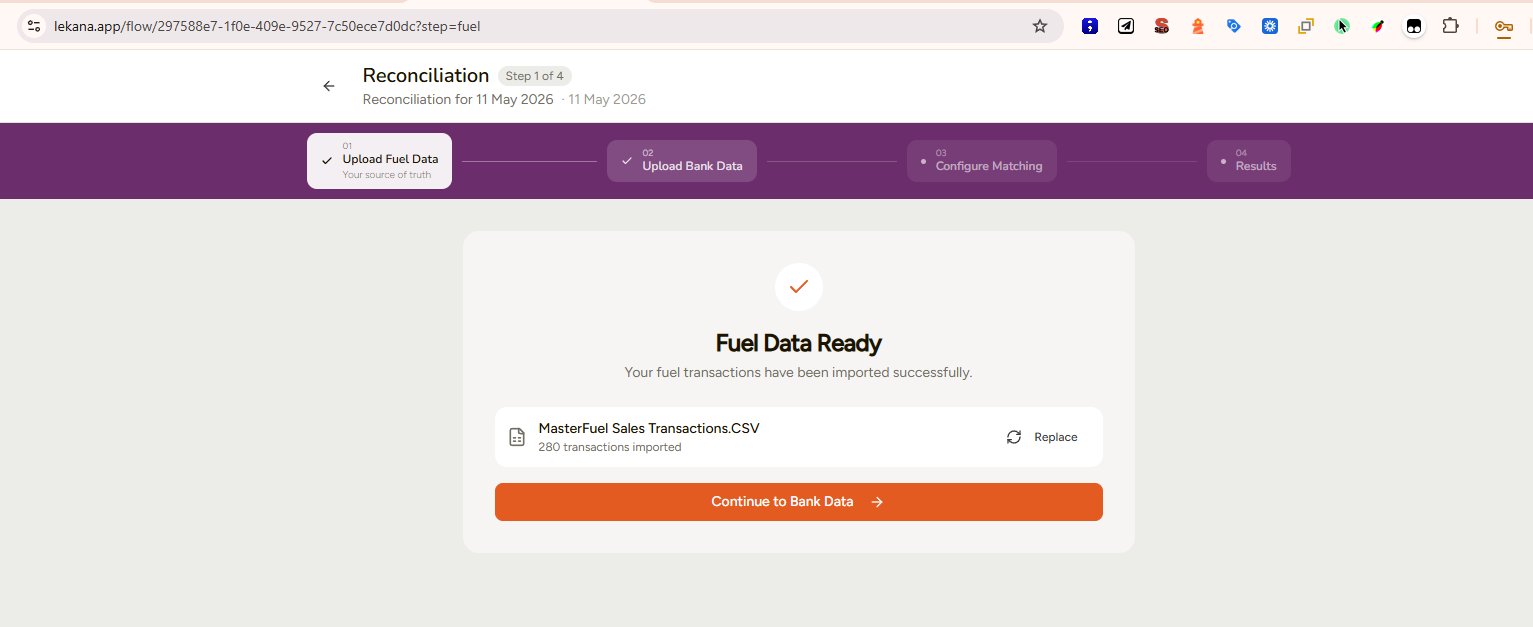
Step 01
Upload your point of sale report for your period.
This is your source of truth. We'll match each individual transaction against the line items in your merchant bank transaction reports.
Tracking cash
Counting your cash isn't the same as tracking it. This page is about closing that gap.
I count it. But counting isn't the same as tracking it.
Right. A count is a snapshot. Tracking means the point of sale's cash story and your actual cash get compared properly. Every cash sale listed. Every refund surfaced. Anything rung through an odd tender shown on its own line, not hidden inside the cash total.
So instead of "cash in R15k, counted R12k, missing R3k", I'd see where the difference comes from?
You'd see the gap for the period, day by day, and the patterns behind it. A shift that's always short. Refunds that spike on certain days. Sales that were rung up and reprinted. You won't get a story for every rand, but you'll know where to look and who to ask.
That's more than I have now. I know cash goes missing but I never know where to start.
And once you see the pattern, whether it's a staff member, a shift, or a tender type, you can do something about it.
Your data stays yours
Here's exactly what Lekana needs: your point of sale report, your merchant bank transaction report for the same period, and the cash you received. That's it.
We never connect to your bank account, and we never see anything you don't upload.
What happens next is your call. Work through the results yourself, ask us to walk you through them, or ask us what we see. The numbers are yours either way.
The pilot
You might find something that explains the gap. In that case you either keep using Lekana to stay on top of it, or you solve it yourself and move on. Either way, you've got the answer.
Or you might find everything's good, and get peace of mind.
We get to work with real data, real problems, and real patterns. That matters to us.
No matter what you find, or don't find, you come out ahead.
From the pilot
The numbers agreed with each other. The money still wasn't arriving. Once the reconciliation ran, the patterns surfaced. Once they were named, they could be stopped.
Shared with permission. Your numbers will differ. The patterns repeat.
How it works
Step 01
This is your source of truth. We'll match each individual transaction against the line items in your merchant bank transaction reports.
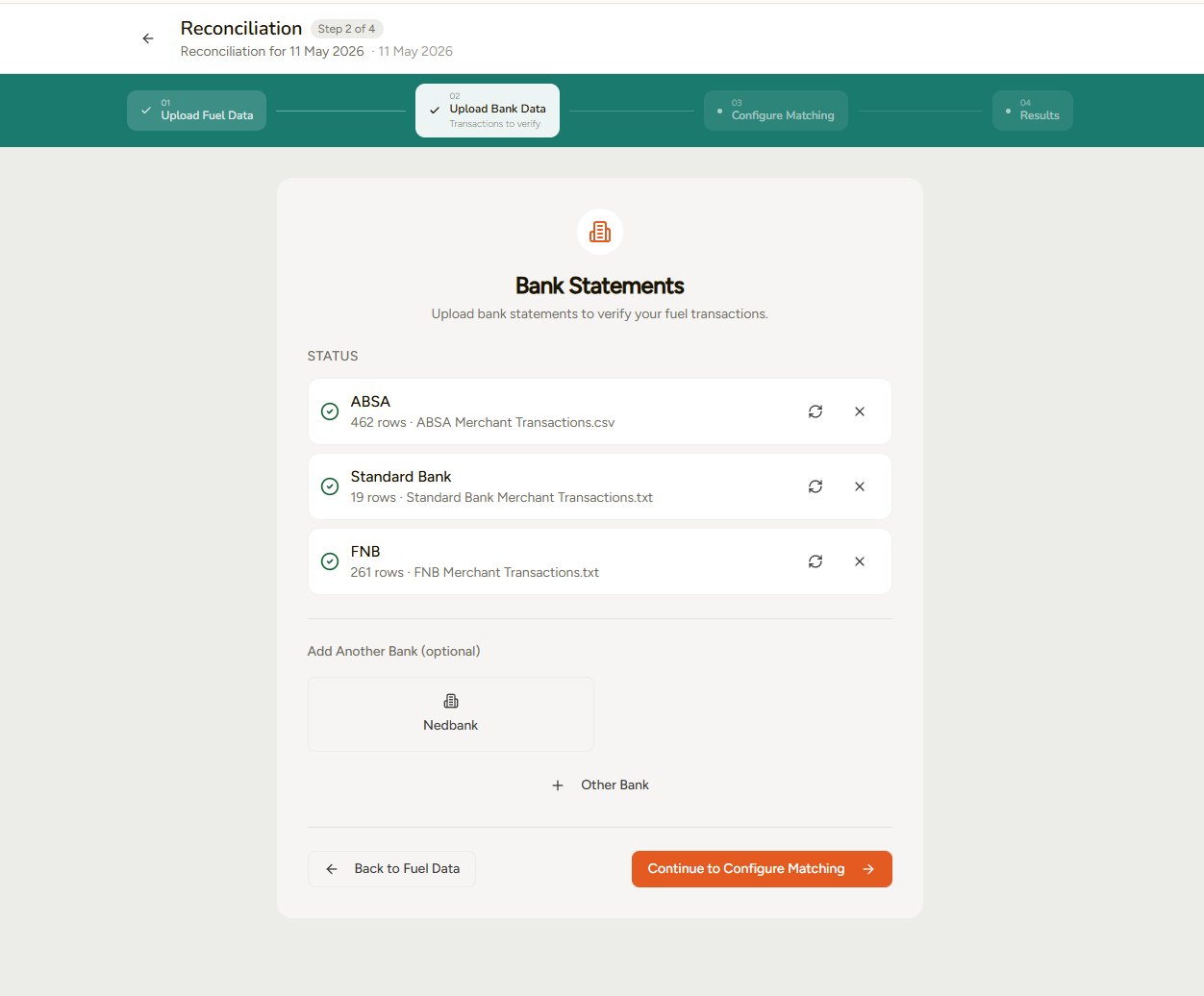
Step 02
This is what your processor actually received. Not the same as your bank statement: the statement shows bulk payout totals, the merchant transaction report shows every individual card transaction behind them. Multiple banks in the same period are fine.
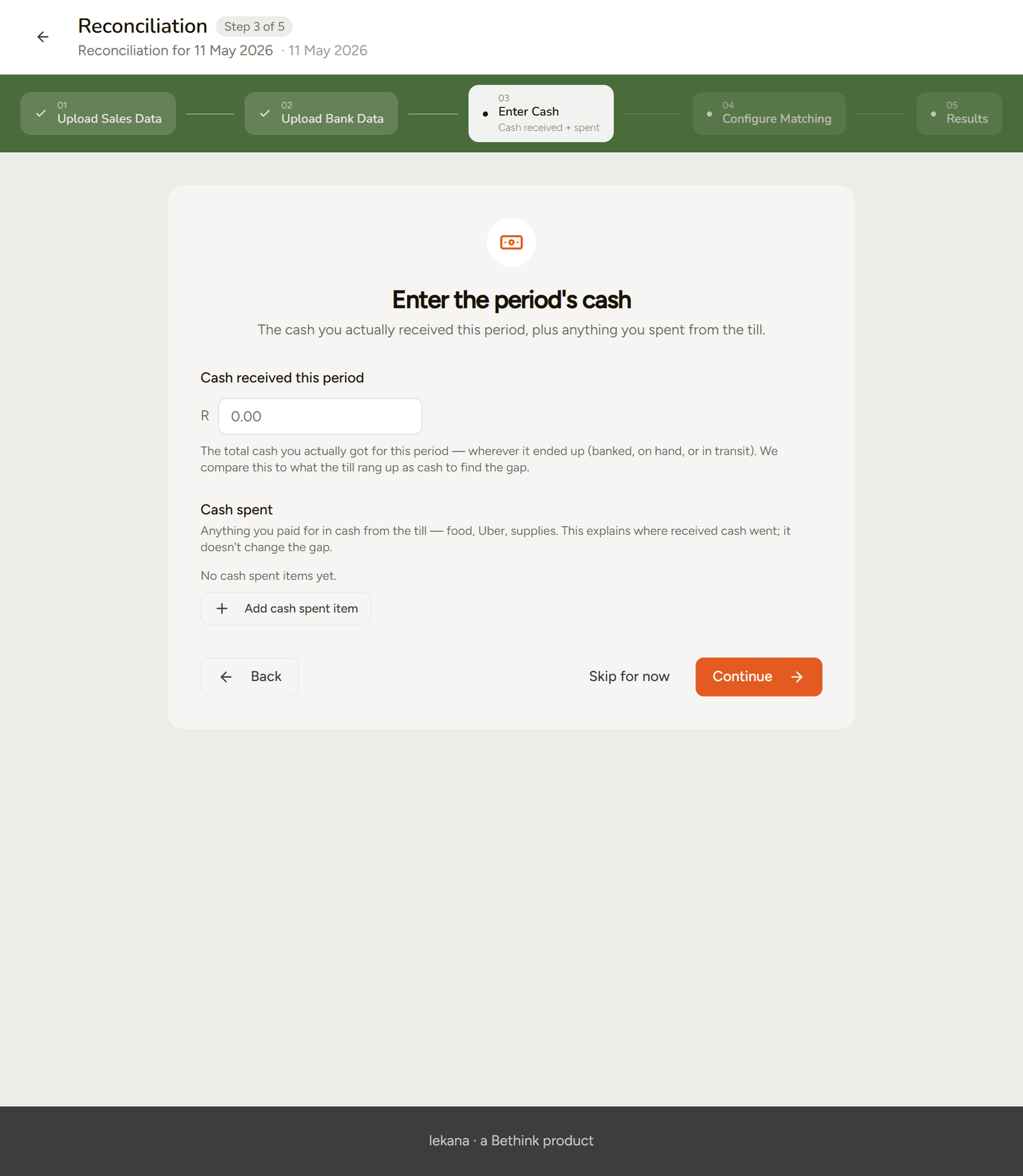
Step 03
We compare this to what your point of sale rang up as cash, to find the gap. Wherever the cash ended up: banked, on hand, or in transit.
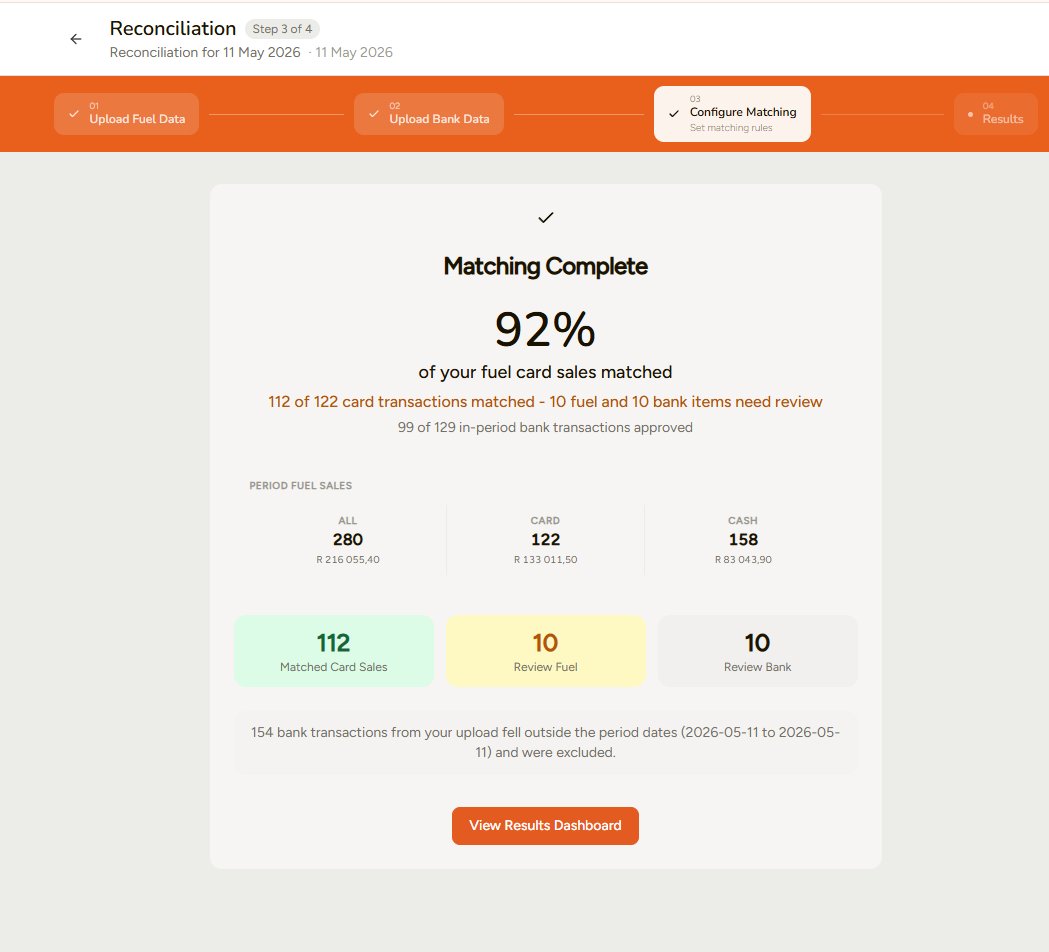
Step 04
The match rate. Card, cash and other tenders, each on its own line. The cash gap. The items needing your attention.
After that, we'll talk about what happens next. We onboard businesses one at a time, personally.